
Deliver To :
Frankfurt am Main, Hesse... 60327Categories
- Restaurant Equipment

- Refrigeration
- Tableware
- Food Trailers and Trucks
- Hotel Supplies
- Smallware
- Shop By Brands
- About us
- Blogs
- Contact us
- Privacy policy

Deliver To


 0
0 
Deliver To :
Frankfurt am Main, Hesse... 60327Food Truck
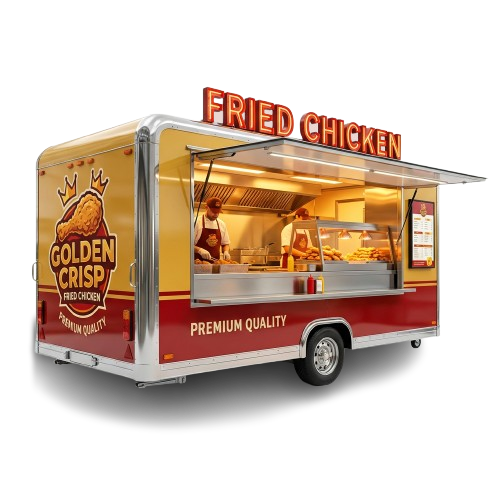
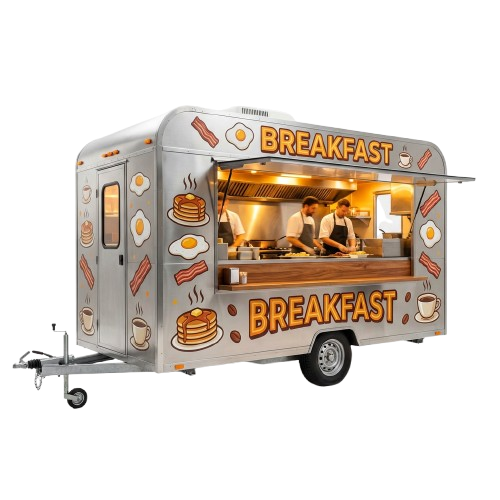
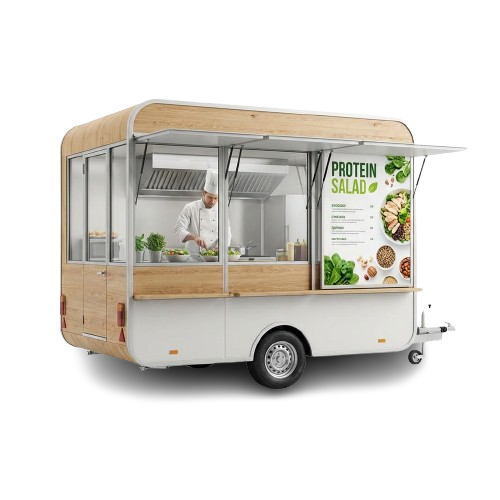
Fully equipped food trucks built for fast service, efficient workflows, and daily commercial food sales.


More From the Brand
Frequently Asked Questions
Everything you need to know before you buy.
A food truck is a mobile commercial kitchen built inside a vehicle that allows businesses to cook, store, and sell food in different locations. Most food trucks include equipment such as griddles, fryers, refrigerators, and exhaust hoods that comply with local health department regulations. In the United States, food trucks must follow FDA food safety guidelines and local permitting requirements. Operators often connect to propane, generators, or electrical hookups to power cooking equipment and refrigeration systems.
A typical food truck interior ranges between 80 and 160 square feet of usable workspace depending on the vehicle size. Most trucks are built on step vans measuring 14–26 feet long with an interior width of about 7–8 feet. This compact layout is designed to accommodate 2–4 staff members working simultaneously. Efficient kitchen design often includes wall-mounted storage, undercounter refrigeration, and multipurpose cooking equipment to maximize productivity within limited space.
A properly maintained food truck typically lasts 10–15 years depending on vehicle condition and equipment usage. The truck chassis often follows the lifespan of commercial delivery vehicles, while cooking equipment such as griddles or fryers may last 7–10 years with regular maintenance. Refrigeration systems and generators may require replacement sooner. Routine servicing, proper ventilation, and cleaning help extend the lifespan of both the vehicle and the installed commercial kitchen equipment.
Food trucks typically use propane gas, gasoline generators, or shore power connections to operate kitchen equipment. Propane is commonly used for griddles, ranges, and fryers because it provides consistent high heat. Generators ranging from 5,000 to 12,000 watts often power refrigeration units, lights, and small appliances. Some trucks also connect to external electrical hookups when parked at events or commissary kitchens to reduce generator usage.
Most food trucks are designed for 2–4 staff members working at the same time. Compact kitchen layouts require employees to perform multiple roles such as cooking, assembling orders, and operating point-of-sale systems. Efficient workflow design is critical to prevent congestion in the limited workspace. Many trucks use combination equipment such as griddle-fryer units and undercounter refrigeration to maximize productivity without requiring additional staff.
A standard food truck typically contains commercial cooking and refrigeration equipment designed for compact mobile kitchens. Common installations include flat-top griddles, deep fryers, prep tables, undercounter refrigerators, handwashing sinks, and NSF-certified food storage containers. Many trucks also include commercial ventilation hoods, fire suppression systems, and hot holding units that maintain food temperatures above 140°F. Equipment must meet health department and fire safety standards before the truck can legally operate.
Operating a food truck in the United States requires multiple permits issued by local and state authorities. Most operators must obtain a food service license, mobile food vendor permit, fire safety inspection approval, and a health department certificate. Trucks must comply with FDA Food Code standards and may also require NSF-certified equipment. Many cities require commissary kitchen agreements where trucks store food, clean equipment, and refill water tanks.
Food trucks must follow strict temperature guidelines defined in the FDA Food Code. Cold food must be stored at 41°F (5°C) or below in commercial refrigerators or prep tables. Hot foods must be held at 140°F (60°C) or higher using steam tables or heated holding cabinets. Frozen foods must remain at 0°F (-18°C) or below. These temperature controls help prevent bacterial growth and are routinely checked during health department inspections.
A food truck is a self-contained vehicle with a built-in kitchen and engine, while a food trailer is a separate mobile kitchen that must be towed by another vehicle. Food trucks offer better mobility and faster setup, while food trailers often provide larger kitchen space and lower initial vehicle maintenance. Both must meet the same FDA food safety standards and typically contain similar commercial equipment such as fryers, refrigerators, and prep stations.
Food trucks are commonly used by restaurants, cafés, bakeries, and catering businesses to serve food in mobile locations. They are frequently operated at festivals, office parks, college campuses, sporting events, and urban street markets. Many established restaurant kitchens also use food trucks to test new menu concepts or expand brand reach. The mobile format allows operators to reach high-traffic locations without the fixed costs of a traditional restaurant building.

Popular searches
HorecaStore is the fastest-growing online restaurant-supply company in the U.S. stocking 100,000+ items from True, Vulcan, Hoshizaki and more, ships free next-day nationwide, and beats competitors by 8–15 % with zero freight.
HorecaStore is the fastest-growing online restaurant-supply company in the U.S., stocking 100,000+ products from True, Vulcan, Hoshizaki and more in our own warehouse. We ship free next-day nationwide, beating competitor prices by 8–15 % with zero freight or middle-man markup.
